Posts

Why Braille Is Essential for True Independence for Blind Individuals

Independence means having control over daily life without relying on constant assistance. For blind individuals, access to information determines that freedom. Braille provides a direct and reliable way to read, write, and understand the world independently. Without braille, many everyday tasks become difficult or unsafe. True independence begins with accessible communication. How Braille Empowers Daily Living Braille allows blind individuals to manage tasks with confidence. People use braille to read medication labels, personal mail, menus, and instructions. These small moments shape daily independence. Relying on others for basic information limits privacy and confidence. Braille removes that dependence and restores control. Braille also supports accurate decision-making. Reading information through touch reduces errors that audio tools sometimes cause. Tactile reading remains reliable in noisy environments or private settings. This consistency makes braille essential for independent...

Why Braille Is Still Relevant in a Voice-First World

  Voice assistants, audiobooks, and smart devices have changed how we access information. Many people now rely on spoken content for convenience and speed. This trend raises a common question: Is braille still necessary in a world driven by voice technology? The answer is yes. Braille remains essential for literacy, independence, and equal access for millions of blind and visually impaired individuals. The Role of Braille in Literacy Listening to information is helpful, but it cannot replace reading. Braille provides a tactile reading system that supports spelling, grammar, and sentence structure. These elements are hard to learn through audio alone. Students who rely solely on voice tools often struggle with writing and comprehension. Braille strengthens literacy, just as print does for sighted readers. It lets readers comprehend punctuation, formatting, and mathematical expressions. Voice tools deliver information, but braille builds proper reading skills. This makes it irreplace...

How Braille Music Opens Doors for Blind Musicians

Music is often called the universal language, but for blind and visually impaired musicians, learning it requires a different pathway. Traditional sheet music depends on sight, leaving many without access to written scores. This is where Braille music steps in. By making musical notation accessible, Braille music empowers blind musicians to study, perform, and compose with the same depth and independence as sighted artists. What Is Braille Music? Braille music is a system of musical notation designed for people who are blind or visually impaired. It uses combinations of raised dots to represent notes, rhythms, dynamics, and expressions. Unlike standard Braille for reading text, Braille music is unique because it condenses complex musical symbols into a tactile format. With training, musicians can interpret full compositions by touch, whether classical, jazz, or modern. The Power of Accessibility in Music Access to Braille music creates opportunities that extend beyond personal enjoyme...

How Braille Music Supports Composition & Creativity

Music is often called a universal language, but for people with visual impairments, accessing and creating music requires a different approach. This is where Braille music plays a vital role. It provides a structured way for musicians to read, write, and compose music independently. By offering more than just a tool for learning, Braille music also fosters creativity and supports the composition process. The Challenge for Visually Impaired Musicians For many musicians, sheet music is a roadmap. However, for individuals who are blind or visually impaired, traditional sheet music is often inaccessible. Relying solely on auditory memory or recordings limits the amount of music that can be studied, performed, and created. Without access to written notation, composing or revisiting complex musical pieces becomes difficult. How Braille Music Helps Braille music is a specialized system of notation that translates musical symbols into tactile patterns, allowing individuals who are blind or hav...

Accessibility Is Not a Luxury: Why Braille Services Are Essential

In our modern world, accessibility should not be considered a bonus option, but rather an inherent human right. For the millions of those who are visually or blind impaired, accessibility is having the necessary tools to live, work and even learn on their own. One of the most essential devices is braille. However, Braille services are often ignored, unfunded or viewed as only an option. This kind of thinking not only hinders possibilities but also creates obstacles that impact the lives of people every day. Barriers Still Exist Despite advancements in the field of disability rights and technology accessibility, access to information written isn't always the same for visually impaired and blind people. The majority of printed materials, classroom content and music scores aren't readily accessible in Braille. Even in schools, students who depend on Braille frequently receive their materials late or not at all. This inaccessibility could cause serious problems: Inadequate educatio...

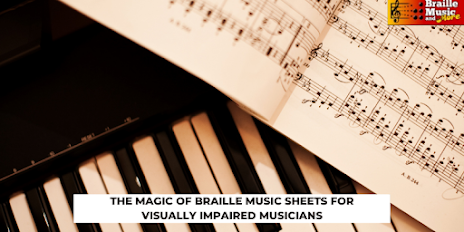
The Magic of Braille Music Sheets for Visually Impaired Musicians

Image
  Just as Braille has revolutionised visually impaired individuals read and get information. Braille music sheets have transformed how visually impaired musicians engage with music. Music is a universal language that touches our hearts and soul, allowing us to express emotions that words alone cannot express. For visually impaired individuals, the world of music might seem inaccessible. However, thanks to Braille services music is now open to them in a way that's both tangible and enchanting. In this blog, you’ll know more about Braille sheet music and the importance of it. What is Braille sheet Music?                   Braille sheet is a form of sheet music translated into Braille for blind or visually impaired individuals to enjoy. Braille is a tactile writing system used by blind and visually impaired people. These raised dots form patterns representing letters, numbers, or even musi...

Restaurant Accessibility: Serving Diners with Visual Disabilities

Image
What's not to love about dining out? Quality time with friends or family; creating an inclusive dining experience ensures equal rights while increasing customer satisfaction and loyalty. In this blog post, we will explore methods restaurants can implement and with the help of a braille transcriber accommodate diners with visual disabilities. 1.Clear Signage and Menus: Clear signage and menus are crucial for individuals with visual disabilities to navigate and understand the restaurant's offerings. Use braille transcription on menus and signage for maximum readability. Braille or audio menus provide alternative solutions for those requiring them. 2.Staff Training: Provide restaurant staff with training on effectively communicating and assisting customers with visual disabilities. Encourage patience, respect, and understanding among their members. Teach them with the help of braille transcription services how to guide diners to their tables while explaining their surr...